


Protein stabilisation
What is protein stabilisation?
Stability is one of the most important things that people look at when judging the quality of a wine. The presence of unstable proteins, mainly in white and rosé wine, can lead to the formation of haze during storage and shipping.
Pathogenesis-related (PR) proteins are the main unstable molecules that cause protein haze in most white, rosé, and sparkling wines. These proteins need to be removed.
The two major sub-classes in wine are thaumatin-like proteins (TLPs) and chitinases (M. Marangon, 2017). The concentration of these proteins (produced by the plant as a defence against fungi) depends on the grape cultivar (Sauvignon, Verdejo, Traminer, etc.) and the level of pathogens in the vineyards.
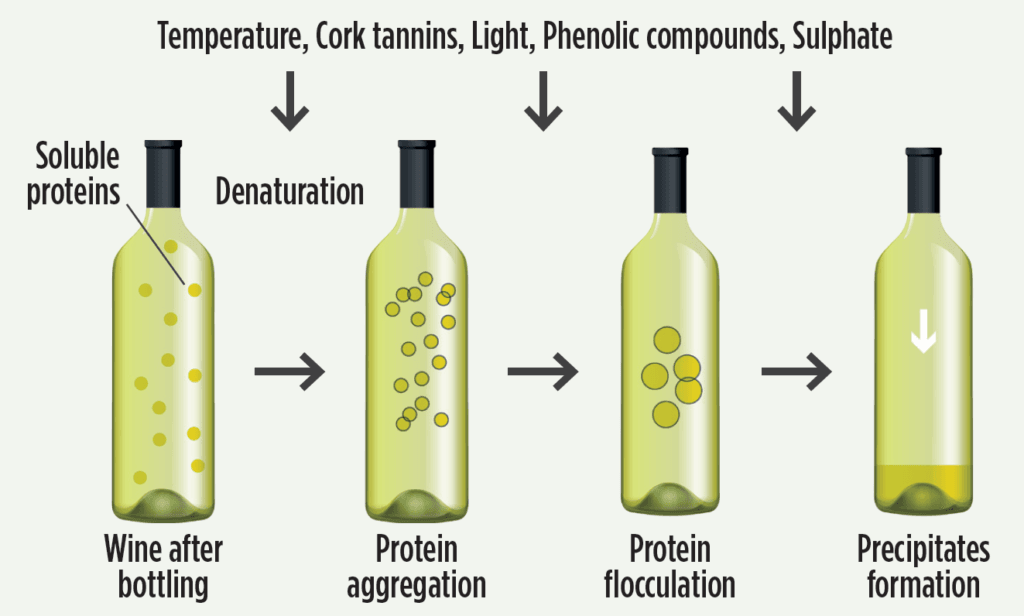
As shown in Figure 1, high temperatures, cork tannins from sulphates, and phenolic compounds all contribute to the aggregation phenomenon that causes haze formation.
Most of the time, winemakers use high doses of bentonite (up to 200 g/hL) to keep the proteins in wine stable. This treatment is normally considered efficient, but with some major constraints:
- Not easy to use
- Potential release of heavy metals
- Absorption of aroma compounds = quality loss
- Loss of wine and high level of sediment to be eliminated (cost implications)
How can we help?
In order to avoid these disadvantages, we at Oenobrands has developed Rapidase® Proteostab, a liquid enzyme formulation with specific protease activity.
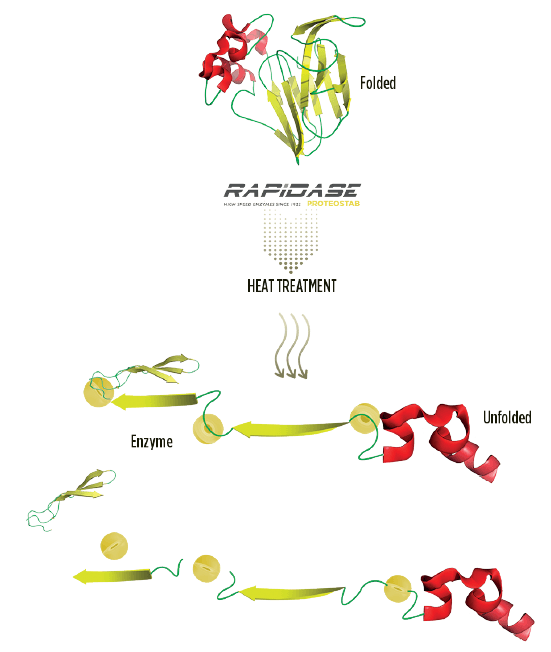
Rapidase Proteostab is active on chitinases and thaumatin-like proteins, responsible for haze formation in white, rosé, sparkling, and red wines. Rapidase Proteostab is added to the mixture just before a heat treatment. This step is necessary to unfold instable proteins and allow them to be hydrolysed by this proteolytic (endopeptidase) enzyme preparation (Figure 2).
Without the thermic shock, the effect of the enzyme could be partial and not sufficient to prevent protein instability. After heat treatment, the must is to be cooled down as quickly as possible, after which the standard winemaking protocol is followed. The correct use of Rapidase Proteostab will result in protein stability in wine, thus avoiding the need for any further bentonite treatment. Protein stability can be tested with the usual heat test.
This enzyme is an acid protease named Aspergillopepsin I, produced by the controlled fermentation of a selected strain of Aspergillus niger.
Oenobrands winemaking trials
Since 2019, in collaboration with our distributors, Oenobrands has performed numerous trials under various winemaking scenarios to test the efficiency of Rapidase Proteostab in real-life conditions.
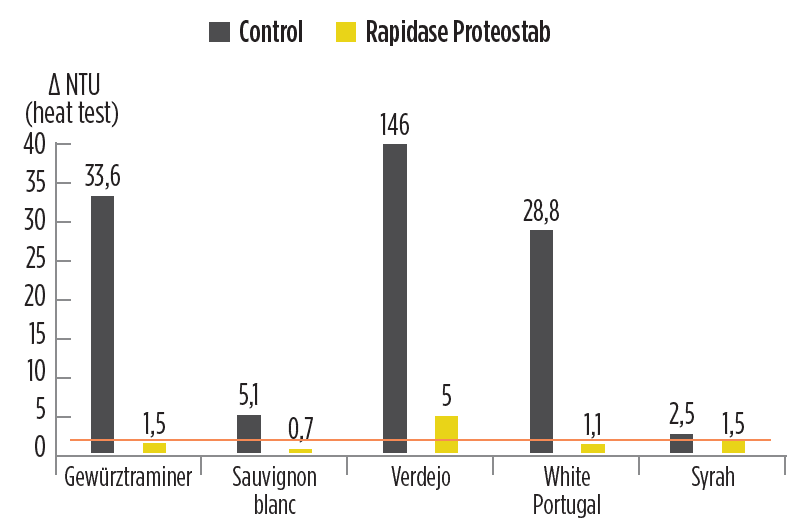
Red thermoflashed grapes in Argentina and white grapes in Spain, Portugal, and Italy were protein stable (heat test < 2 NTU) after treatment with the new acid protease formulation.
No bentonite treatment was necessary, and the desired wine quality was obtained while avoiding wine losses and bentonite disposal costs.
Are there any negative effects on wine quality due to heating?
Numerous experiments have shown that there are no noticeable variations in the sensory profile of the wine with or without protease when heating is performed continuously and with effective equipment for 1-2 minutes at 70–75 °C.


What if Rapidase Proteostab is used during alcoholic fermentation?
Rapidase Proteostab has been evaluated in countries where it is permitted to use it without a mandatory heating step.
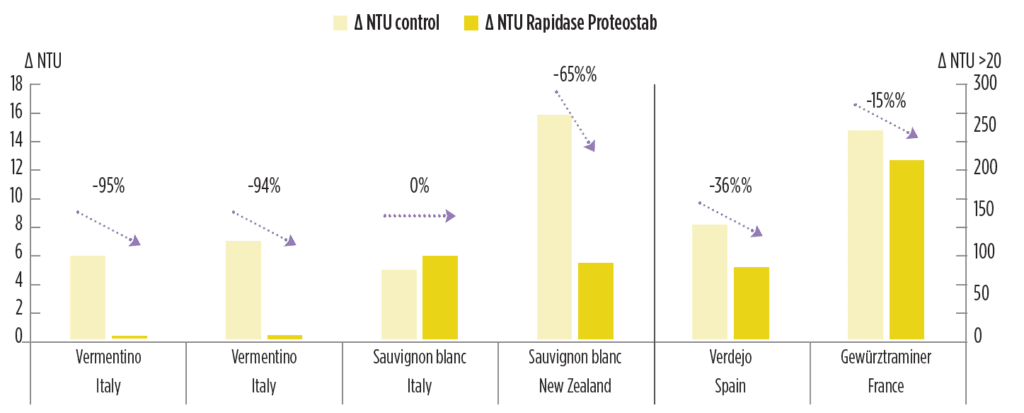
We discovered that the efficacy of Rapidase Proteostab treatment on non-heated, unstable proteins might vary due to incomplete unfolding.
Protein stability is affected by the grape cultivar, the vineyard’s sanitary conditions, and potentially the balance of Chitinases and TLPs.
Discover the RAPIDASE range

What about you?
With a highly qualified team of experts in many fields, Oenobrands strives to offer winemakers’ novel and scientifically sound solutions, as well as to highlight the positive synergies between its products.
Search your solution or product
Tell us about your difficulties, and we will answer you